EVMS

Authorized Unpriced Work (AUW) and Earned Value Management Systems

, ,

Authorized Unpriced Work (AUW)

Authorized unpriced work (AUW) is an area that can cause contractors difficulties and when not handled properly, can result in a DCMA EVMS review team writing up a Corrective Action Request (CAR) as we have discussed in previous blogs.

At times, contractors can find themselves in a position where projects are not following commonly used and recommended practices that are described in the EIA-748 Standard for EVMS guidelines as well other guidance such as the NDIA Integrated Program Management Division (IPMD) EIA-748 Intent Guide and the DoD Earned Value Management System Interpretation Guide (EVMSIG).

It is always better to be proactive to ensure project personnel have the proper direction they need. H&A suggests that you review your EVM System Description as well as any related procedures to ensure that they:

  1. Reflect the EIA-748 guidelines (for AUW in particular, see Guidelines 8 and 28) as well as related industry and government implementation guidance.
  2. Are clear and specific on how project personnel are to handle authorized unpriced work.

Humphreys & Associates suggest verifying the following items are discussed in your EVM System Description.

  1. How and when work scope and budget are distributed from undistributed budget (UB) to control accounts and subordinate work packages or planning packages. This includes:
    • Describing what controls are placed on the use of UB.
    • Stipulating a specific period of time that work scope and budget can be held in UB for fully negotiated work.
    • Describing how and when UB is distributed to control accounts when the work scope has not been defined (i.e., the work scope represents AUW).
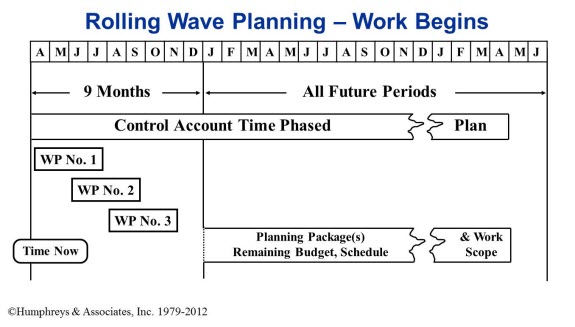
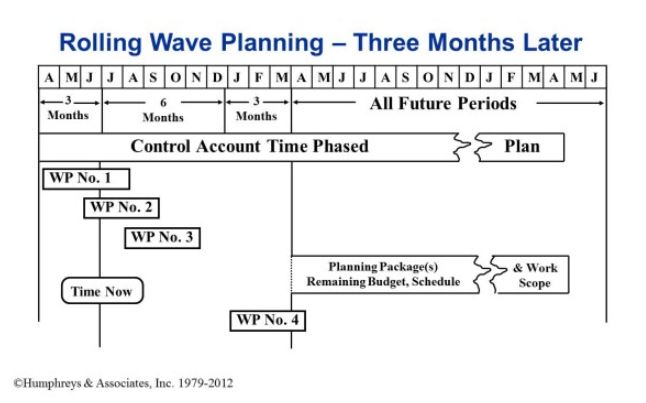
    • The interim budgeting procedure used during the definitization process to distribute the work scope and budget from UB to the work package level for the near term effort (such as three to six months). This interim budgeting procedure should be followed until the AUW scope of work held in UB is definitized and distributed to control account work packages or planning packages.
  2. Incorporating authorized changes in a timely manner. The EVM System Description will need to describe what:
    • Constitutes an authorized change.
    • Indicates authorized changes have been incorporated.
    • Constitutes “timely” incorporation.
  3. The process for establishing internal budgets for authorized but unpriced changes should be based on a resource plan for accomplishing the work. Project managers should have a detailed plan in place for the near term work using cost estimates and resource plans with appropriate direction to notify the customer when spending approaches any not to exceed (NTE) spending limits. It is critical that traceability through all steps of the process can be demonstrated.

For a more in-depth discussion on how to handle authorized unpriced work (AUW), see the article posted on the Humphreys & Associates EVMS Education Center, EVMS Practitioner section.

Humphreys & Associates is available for consulting and information on this topic. Give us a call!

Authorized Unpriced Work (AUW) and Earned Value Management Systems Read Post »
Earned Value Management System Success – 7 Steps

, , ,

An Earned Value Management System is a common contractual requirement on US federal government agency projects and on some foreign government agency projects. Earned Value Management is an effective tool to provide more visibility into project performance for government customers and for internal management.

As with any new concept or tool, success is dependent on how the system is implemented. Upfront planning can mean the difference between success and failure. Based on more than three decades of experience helping hundreds of companies implement an Earned Value Management System, Humphreys & Associates is well versed in what it requires to create a compliant, effective Earned Value Management System (EVMS).

The seven steps below can help to expedite and manage the implementation of a compliant EVM System. Successful implementation can greatly enhance productivity and the bottom line.

Earned Value Management System Success – 7 Steps

Step 1 – Management Team Commitment

Commitment and support from the management team is essential to the success of the EVMS implementation. Without it, the process will fail. Establishing an implementation team responsible for developing the strategic plan and schedule is a critical initial step. Read more…

Step 2 – Pre-Implementation Assessment & Gap Analysis

Before implementing an EVMS, it important to have a clear understanding of the state of the current project control system. This is essential for determining the full scope of the implementation effort. Comparing the current processes and procedures to the 32 guidelines in the EIA-748 Standard for Earned Value Management Systems is part of the process.

Internal EVM experts or an independent third party commonly conduct this assessment, sometimes referred to as a requirements analysis or gap analysis.

The intent is to produce fact-based information useful for creating a realistic implementation plan. What are the processes, tools, and training that need to be enhanced or implemented? Based on this knowledge, an implementation plan and schedule can be produced that defines the specific tasks and milestones to accomplish the end objectives.  Read more….

Step 3 – System Structure and Integration

At the beginning of the system enhancement or design stage, it is useful to focus on each of the subsystems that support the nine EVMS process areas and how they integrate with each other. When the customer’s reviewing agency reviews the company’s EVMS, it will look at each of the following process areas:

  • Work Organization
  • Planning and Scheduling
  • Work/Budget Authorization
  • Accounting
  • Indirect Management
  • Management Reporting and Analysis
  • Revision sand Data Maintenance
  • Material Management
  • Subcontract Management

The EIA-748 32 guidelines are the foundation for determining if an EVMS meets the requirements for a compliant system. Developing flow diagrams and storyboards are useful tools at the beginning of the design phase to note what needs to be added or enhanced to create a fully integrated EVMS as well as to satisfy the EIA-748 guidelines. Read more…

Step 4 – The System Description Document

The primary document for describing the system and how it satisfies the EVMS guidelines is the EVM System Description. Internal formal procedures support this document. The system description and related procedures are meant to be the all-inclusive explanation of the EVMS characteristics and how the system is used to manage a project from inception to completion.

The EVMS storyboard and system description are complementary work efforts. An excellent starting point for the system description is to develop an outline that describes the subsystems for each of the nine process areas. Read more…

Step 5 – Training

Training is an important part of the implementation process. This includes upper level management, project managers, functional managers, control account managers (CAMs), and analysts. The training should reflect the EVM System Description, as the government reviewing agency’s team will assess whether or not a project is following the company’s EVM System Description. The development and execution of the training plan as part of the overall implementation plan helps to ensure the various end-users complete the training they need. Read more…

Step 6 – System Implementation

System implementation on a pilot project requires dedicated teamwork and is the most time consuming of the seven steps. An easier approach is to implement the EVMS on a new project so that all project artifacts reflect the system description at the onset.

Projects that run effectively and efficiently often translate into higher profit margins and result in more company business. Read more….

Step 7 – Operation and Use Verification

Once in place, periodic internal reviews, sometimes called self-surveillance, can be done to ensure that the EVMS implementations on the various projects continue to comply with the company’s EVM System Description. This helps to prevent the system from atrophying over time. It also provides an opportunity to address additional training needs, resolve common implementation issues, and enhance the system.

Independent third parties can also assist with the self-surveillance process. This provides an added benefit by using experienced outside consultants who regularly perform mock compliance or certification and other types of reviews. The outside consultant team can also update a company on the latest issues the government agency review teams are focusing on, provide a fresh look at how an EVMS is used on a project, or bring new ideas to the table that can improve the company’s EVM System.

Similar to the implementation and use of the EVMS, it is important to establish a repeatable process for self-surveillance, capture the results, identify the problem areas, identify actions to address the root cause of the problems, and track them to closure. Read more….

For a full-length copy of this article, see our EVMS Educational Center.

Earned Value Management System Success – 7 Steps Read Post »

Scroll to Top